


Precip – Rain Totals & Weather
4.7912.00 Reviews
App Specs
- Version
- 4.2.9
- Updated On
- License
- Free
- Downloads
- 100,000+
- Developer
- Precipitation Inc.
- Categories
- Weather
- Platform
- Android
Screenshots
 Analysis by AppCompare
If you're anything like me, you're always peeking out the window to check the sky or constantly scrolling through weather apps to plan your day. Enter Precip – Rain, Snow & Weather, the app that's been my trusty sidekick in navigating the whims of Mother Nature. Let me walk you through my experience with this handy little tool that's making weather forecasts feel like a breeze.
What makes it worth considering is its emphasis on precipitation at a specific place, rather than treating a broad city forecast as the whole story. I find that useful when the weather can change over a short distance: a walk across town, a drive to a trailhead, or a choice between doing an outdoor task now and waiting. The app is free to install, though it also offers in-app purchases; I’d start with the basic experience and judge whether its location-focused approach fits my routine before paying for anything.
Precip is a weather app from Precipitation Inc. It has a 4.4 average from around 2.6 thousand ratings, and more than 100 thousand installs. That gives me a sense that it has found an audience, but popularity alone doesn’t tell me whether it will suit your needs. The useful question is whether you want a closer look at rain and snow at particular locations, or whether a simple daily forecast is enough.
Getting Started with Precip
First things first, downloading Precip – Rain, Snow & Weather from your app store is as easy as pie. With a quick install, you're ready to dive into the world of weather predictions. The app opens up to a sleek, user-friendly interface that even my non-tech-savvy friends can navigate. It's like the app just gets you, you know?
The app is free and rated for Everyone, which makes it approachable for a household that wants to check conditions together. It was released on March 26, 2024, and the current version is 3.0.1. It runs on Android 6.0 or later. Those details are worth checking before installing on an older device, particularly if it is a spare phone kept in a car or shared at home.
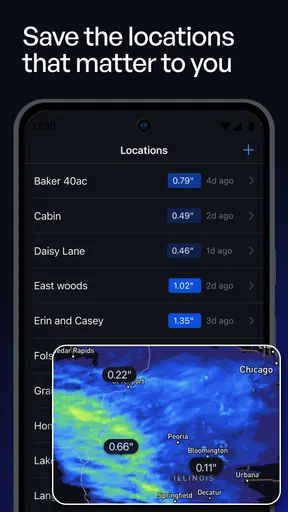
Once you're in, setting up your location is a piece of cake. You can either use your device's GPS or manually enter your city. I love that it remembers multiple locations, so whether I'm home or traveling, I can get the lowdown on the local weather without breaking a sweat.
For a practical routine, I’d save only the places I genuinely need to compare. Home, work, and a regular weekend destination are usually enough to make location checks quick. A long list can feel convenient at first, but it also makes it easier to open the wrong place when you’re rushing out the door. If I’m traveling, I’d add the destination before leaving and remove it later if I no longer need it.
Worth Reading Before You Choose

EA SPORTS FC Mobile 26 Is a Bigger Football Game, but It Takes Time

Flipboard Shows What News Apps Must Do Beyond the Feed

Switching to Android Auto Means Rethinking Your Driving Routine

Google Calendar Makes a Crowded Week Easier to Manage

Ludo King Makes the Most of the Minutes Between Plans

Baby Panda World Brings Quick Play to Modern Phones, but Its Game Library Feels Busy
Features that Stand Out
Now, let's talk about what makes Precip worth a spot on your home screen. This app doesn't just stop at telling you if you need an umbrella or sunscreen—it goes the extra mile. Here's what caught my eye:
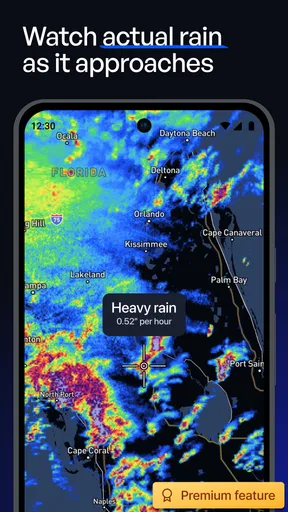
- Minute-by-Minute Forecasts: This feature is a game-changer. Precip gives you hyper-local forecasts updated every minute. It's especially handy when you're deciding if you have time to run errands before the next downpour.
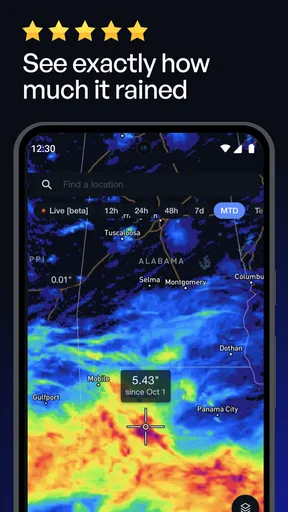
- Detailed Weather Maps: I can't get enough of the interactive maps. They let you zoom in and out to see radar images in real-time. It's like having a weather station in your pocket.
- Severe Weather Alerts: Safety first, folks! Precip provides timely alerts for any severe weather conditions headed your way. It's like having a personal storm chaser looking out for you.
- Customizable Notifications: You can tweak what alerts you receive, so you're not getting bombarded with updates. Want to know only about snow? No problem. Precip lets you customize to your heart's content.
The most useful way to read these tools together is to treat them as parts of one decision, not as separate reasons to keep checking your phone. I might look at the map to understand where a band of precipitation is, then check the chosen location’s forecast, and finally decide whether an alert is relevant to my plans. A map gives context; a forecast gives a time-oriented view; an alert is a prompt to pay attention. None should be treated as a guarantee that conditions will unfold exactly as shown.
There is a small but important trade-off in relying on very local precipitation information: a precise pin can be more useful than a city-wide summary, but only if the selected place represents where you will actually be. If I’m leaving home for a park on the other side of town, I wouldn’t make a decision based solely on my home location. I’d switch to the destination and look at the map as well. That simple habit is more valuable than repeatedly refreshing a forecast for the wrong spot.
Daily Use and Accuracy
In terms of usability, Precip is as intuitive as it gets. The main screen shows a straightforward summary of the day's weather, complete with temperature highs and lows, wind speeds, and the all-important chance of precipitation. Need more info? Just swipe up for an extended forecast, and you’re all set.
For an everyday example, imagine I’m planning a lunchtime walk and have an outdoor errand after work. I can check the local conditions in the morning, look again at the map before heading out, and use a notification as a nudge if the weather deserves another look. If rain seems close, I can bring a light layer or move the errand indoors; if the map suggests the nearest precipitation is elsewhere, I can avoid cancelling plans too early. The value is not that an app makes the decision for me, but that it helps me make a more informed one without opening several unrelated screens.
This kind of workflow is especially handy for people whose plans depend on being outside: dog walkers, cyclists, gardeners, parents arranging a playground visit, and anyone who works between locations. Snow totals can matter too, whether I’m deciding when to clear a path or checking conditions before a winter drive. I’d still use judgment for anything safety-critical, because changing weather and local conditions can make a forecast less certain than a neat screen suggests.
Now, let’s get down to the nitty-gritty: accuracy. I've tested it against other big-name weather apps, and Precip holds its own. While no app is perfect, the minute-by-minute updates are usually spot on, and the severe weather alerts have saved me from getting caught in surprise storms more than once.
I’d be careful not to interpret the word “accurate” as a promise that every location and every moment will match what happens outside. Precipitation can be patchy, and a forecast that is helpful for one block may not describe another equally well. When the sky looks different from the forecast, I trust the conditions I can observe and recheck the map rather than assuming the app must be right. For a longer outing, I’d check again closer to departure instead of treating a morning glance as a final answer.
Settings and Habits That Make Checks More Useful
Notifications are most helpful when they support a specific routine instead of competing with it. Since Precip lets me customize alerts, I’d choose the kinds of weather changes that actually affect my day and leave out reminders I don’t need. Someone who walks a dog may care about approaching rain; a person preparing for winter travel may pay closer attention to snow. The right setup is personal, and I’d adjust it after a few days if the alerts feel noisy or too limited.
Location choice is another setting-like decision that deserves a little care. GPS is convenient when I want conditions near where I am, while manually entering a city makes sense when I’m planning for somewhere else. I would not assume that a location chosen for a trip automatically reflects every stop along the route. For a journey with meaningful changes in terrain or distance, checking the places that matter separately is a safer habit than relying on one destination pin to represent the whole trip.
A useful pattern is to give the app two deliberate checks: one when making the plan and another shortly before acting. That reduces the temptation to refresh constantly while still leaving room to respond if precipitation shifts. I also like comparing the map with the forecast summary rather than focusing on a single number or alert. The summary is quick, while the map can reveal why a local forecast might differ from what I see outside.
Precip is not a replacement for common-sense preparation. If I have a long drive, an outdoor event, or a task that would be difficult to pause, I’d build in a backup plan rather than relying on one forecast. For a flexible walk around the neighborhood, the app’s local view can help me choose a better time. For a high-stakes decision, I’d use it as one input and consult suitable official guidance as well.
Where It Fits Among Weather Apps
The usual weather app is often designed to answer several broad questions at once: what the day feels like, whether temperatures will rise, and what the general outlook is. That can be the better choice if I mainly want a quick glance at a daily summary or a wide-ranging forecast. Precip’s appeal is narrower and more practical when the question is about rain or snow at a particular place. I’d reach for it when location-specific precipitation is central to a plan, not necessarily as my only source for every kind of weather information.
Compared with checking a default weather app and then searching a separate radar map, having a precipitation-focused workflow can save a step. The advantage depends on how often I make those checks. If I rarely plan around rain, another app already on my phone may be enough. If I routinely compare home, work, and outdoor destinations, Precip’s emphasis can make those decisions feel more direct. I would avoid claiming that one approach is universally more accurate: different services can present forecasts differently, and a second view is sometimes useful when conditions are uncertain.
It may also be a better fit for someone who enjoys looking at weather maps than for a person who wants nothing beyond a simple icon and temperature. Map-based information asks the user to interpret what they see. That can be empowering once the habit is familiar, but it is not automatically simpler for everyone. If I only want to know whether to carry an umbrella, a basic forecast may be faster; if I want to judge where precipitation is relative to a chosen location, a map earns its place.
Limits, Costs, and Who Should Choose It
Although the app is free, it includes in-app purchases ranging from $14.99 to $369.99 per item. That is a wide span, so I would read the purchase details carefully before confirming anything and avoid assuming that every useful function requires payment. My recommendation is to explore the free experience first, identify the exact feature or benefit you would pay for, and decide whether you would use it often enough to justify the cost. A large maximum purchase price is a reason to be deliberate, not a reason to assume the app is unusable without spending.
Precip is a strong candidate for people who make frequent outdoor plans, compare several locations, or care about the timing and placement of rain and snow. It can also suit weather-curious users who like moving from a simple forecast to a map for more context. I’d skip it if I rarely check weather, if I prefer a minimal screen with no map interpretation, or if my current weather app already answers my precipitation questions clearly. More information is not automatically better when it adds another step to a routine that already works.
One limitation of any location-based forecast is that a saved place is only useful if I remember to choose the right one. It is easy to glance at the home screen while mentally thinking about a different destination. My practical fix is to make the location check part of the same habit as checking the time I need to leave: confirm the place first, then use the forecast and map to decide. That is a small discipline, but it prevents a polished, detailed forecast from creating misplaced confidence.
Overall Impressions
So, is Precip – Rain, Snow & Weather worth downloading? Absolutely. It's more than just your average weather app. With its detailed forecasts, interactive maps, and customizable alerts, it feels like a personal weather assistant. Whether you’re a weather enthusiast or just someone who hates getting caught in the rain, Precip is a solid choice.
What I like most is that its value grows with a repeatable routine: choose the relevant location, check the precipitation picture, and return once before the plan begins. That approach gives the maps and alerts a practical purpose rather than turning them into something to watch all day. If you often need to make quick choices about outdoor timing, those small checks can help you pack, leave, or reschedule with more confidence.
In a world where the weather can be as unpredictable as your favorite TV show's plot twists, having Precip in your pocket gives you a little extra peace of mind. So go ahead, give it a whirl, and let it help you decide whether you need that extra layer or if you can finally wear those new sunglasses.
Pros
- Accurate weather forecasting data.
- User-friendly interface design.
- Customizable alert settings.
- Detailed precipitation maps.
- Minimal ads for free version.
Cons
- Limited offline functionality.
- Requires location access.
- Premium features locked.
- Occasional notification delays.
- Battery consumption is high.
FAQs for Precip – Rain Totals & Weather
What features does Precip – Rain, Snow & Weather offer?
Precip provides real-time weather updates, including rain and snow forecasts, temperature, humidity, and wind speed. It also offers radar maps for visualizing weather patterns and alerts for severe weather conditions, ensuring users stay prepared and informed. Additionally, the app customizes weather notifications based on user preferences.
Is Precip – Rain, Snow & Weather free to use?
Precip offers a free version with essential features like basic weather updates and alerts. However, there may be in-app purchases or a premium version available, which could provide additional features like advanced radar maps, ad-free experience, and more detailed forecasts.
How accurate is the weather forecasting in Precip?
Precip uses data from reliable meteorological sources and advanced algorithms to provide accurate weather forecasts. While no weather app can guarantee 100% accuracy, Precip continually updates its data to offer the most current and precise weather information possible.
Does Precip support multiple locations for weather tracking?
Yes, Precip allows users to track weather conditions for multiple locations. This feature is particularly useful for those who travel frequently or wish to monitor weather for family members in different areas. Users can easily add or remove locations as needed.
Can I customize weather alerts in Precip?
Precip allows users to customize weather alerts based on their preferences. You can set notifications for specific weather conditions, such as rain or snow, and choose how and when you receive these alerts. This ensures you are only notified of weather events that are important to you.


